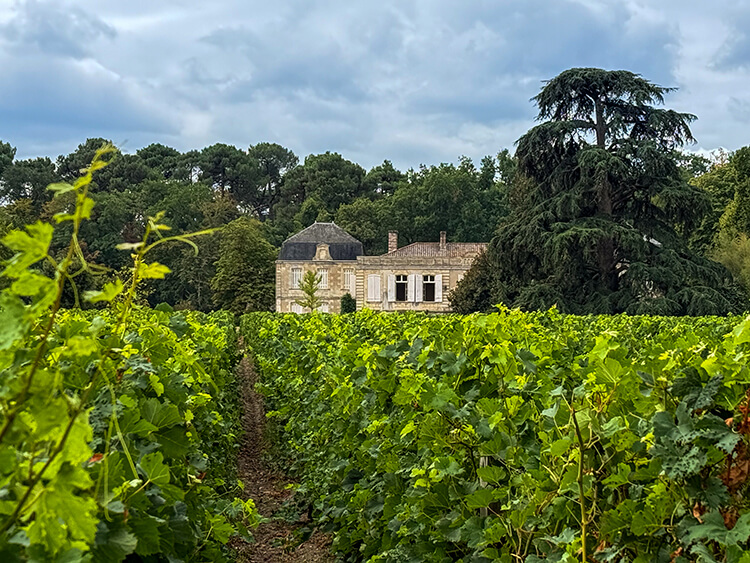
Château Picque Caillou is at the heart of the Pessac-Léognan, a Bordeaux appellation known for both its red and white wines. It is one of the last six urban vineyards of the Pessac-Léognan appellation. The 25 hectare vineyard sits at the gates to Bordeaux, and is a Bordeaux château easy to incorporate into any Bordeaux city visit with convenient access by tram in just over 30 minutes from the city center.
The History of Château Picque Caillou
Located close to the prestigious wine estates Château Haut-Brion and Château Pape Clément, Château Picque Caillou has been a fixture of the Bordeaux landscape since the château was built in 1756. The castle was built by architect Jean Laclotte, famous among the Bordeaux players of the time for building many wine-growing castles as well as merchants’ houses and mansions.
Like many Bordeaux châteaux, the estate changed hands throughout its history. The Bordeaux businessman Etienne Denis acquired the estate in 1947, and owned it up until 1997. Paulin Calvet, who comes from the famous line of wine traders, and his wife Isabelle Denis owned the estate from 1997 until 2026. Château Picque Caillou had picqued the interest of Laurent Marti, president of the UBB rugby team, and he acquired the wine estate in the spring.
The Visit at Château Picque Caillou
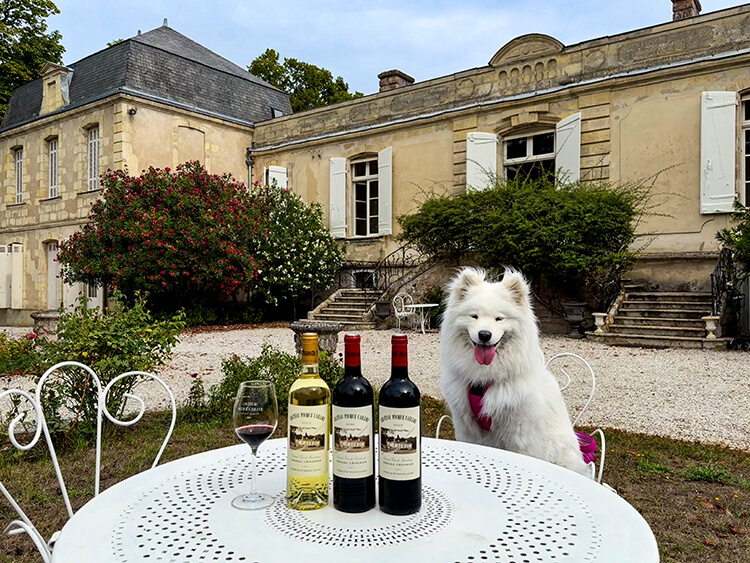
Château Picque Caillou welcomes visitors to the wine estate year round, and is one of the Left Bank Bordeaux wine châteaux that is dog-friendly.
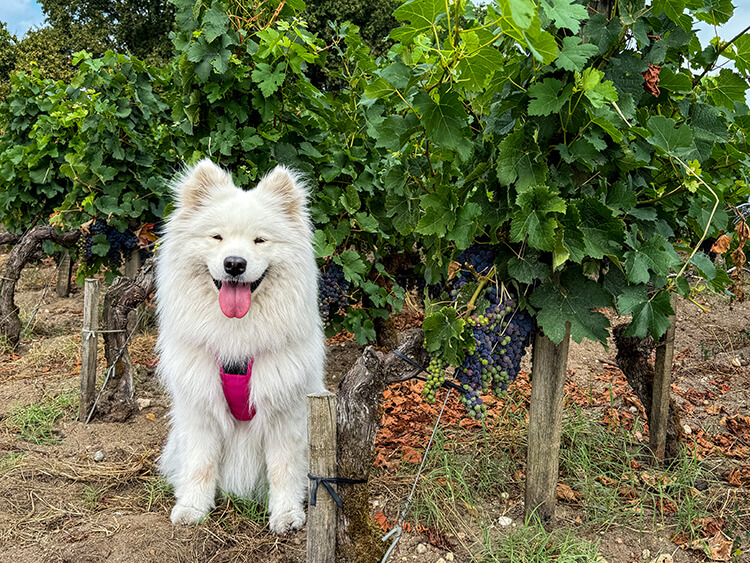
The visit at Château Picque Caillou begins in the vineyard. Once upon a time in the early 1900s, the city of Mérignac had about twenty wine producers. But rampant urbanization gobbled up the gravel soil farmlands, leaving just two vineyards today in Mérignac: Château Luchey-Halde and Château Picque-Caillou.
While many Bordeaux châteaux have vineyard plots that are patches here and there, one of the unique things about Château Picque Caillou is that their vineyard is a single plot of 25 hectares. It is planted in a terroir of sandy gravel, which has ideal drainage, and lends to the production of elegant yet delicate reds and classic whites dominated by the sauvignon grape.
The vineyard is planted with 20 hectares made up of 47% Cabernet Sauvignon and 45% Merlot and a small amount of Petit Verdot. The remaining hectares are dedicated to white wine grapes with 90% Sauvignon and 10% Semillion.
The grape harvest at Château Picque Caillou is entirely manual.
From the vineyard, the visit moves in to the vat room where the grapes benefit from malolactic fermentation. The château currently uses stainless steel tanks, but new owner Laurent Marti has plans for a large renovation of the vat and barrel rooms over the next year.
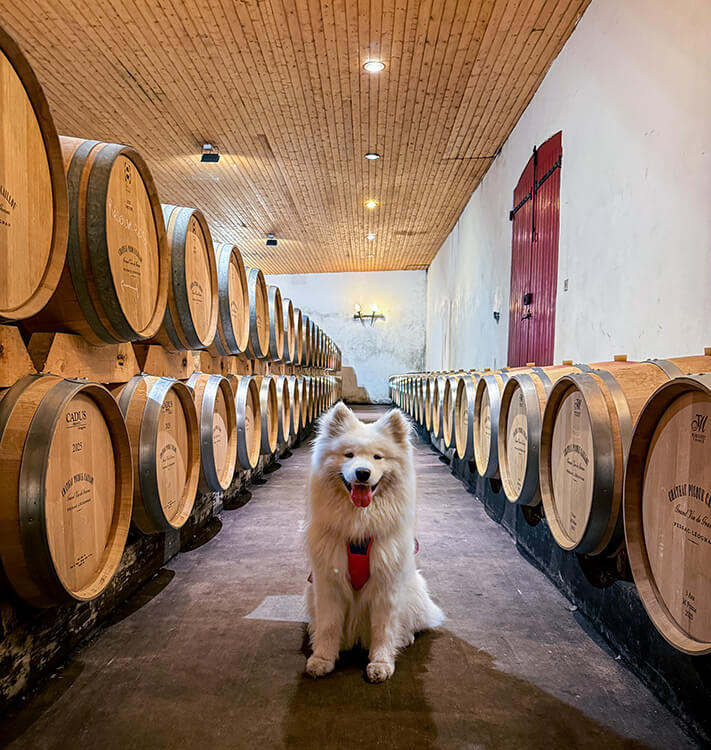
One of my favorite stops on any vineyard tour is always the barrel room. The scent is just intoxicating and builds an anticipation of finally tasting the wine. The wine is aged in French oak barrels to achieve subtle notes and complexity to the wine for 12 months in 30% new French oak barrels.
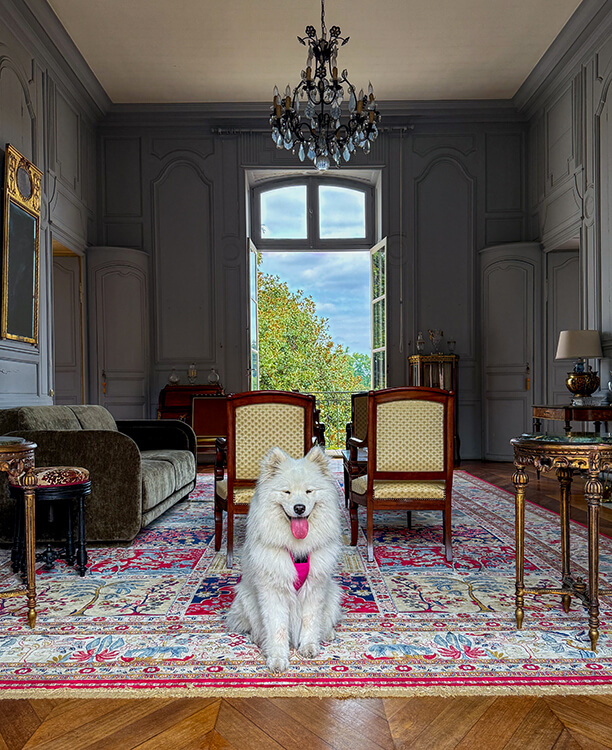
There are several options around Château Picque Caillou to enjoy the tasting. The castle has a beautiful reception room flanked by tasting rooms on either side, each uniquely decorated with period pieces.
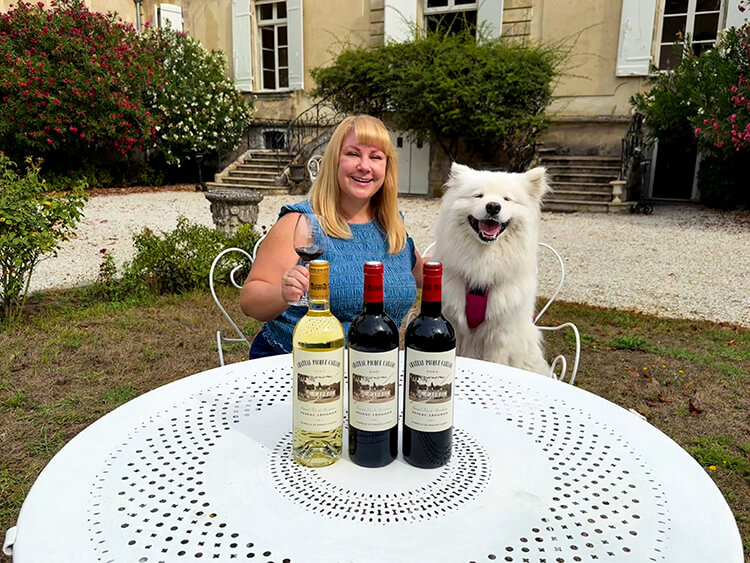
On a beautiful and not too hot day, the garden is also a lovely spot to enjoy the tasting – particularly if you are visiting with your dog. Note that dogs are not typically welcome inside the castle itself due to the many delicate historical objects decorating the castle.
Aside from choosing where to conclude the visit with your wine tasting, visitors can also choose from a classic visit with a tasting of 3 wines of the château, a gourmet tasting with 3 wines of the château and served with a cheese board, or from a vertical tasting of 5 vintages.
Château Picque Caillou has a boutique in which you can purchase wines. If you plan on purchasing a few bottles as a souvenir, I recommend using wine travel bags to securely pack wine in your luggage without worrying about breaks and leaks.
Pessac-Léognan
Located immediately south of the city of Bordeaux, the Pessac-Léognan appellation has been officially recognized as one of Bordeaux’s 67 appellations since 1987. One of the most unique things about the Pessac-Léognan appellation, aside from the appellation’s urban proximity, is that every single wine châteaux in the Pessac-Léognan appellation is family owned.
The appellation’s soils are famous for the gravel and rolled pebbles mixed with clay and sand, which provide a remarkable natural drainage system. The close proximity of the city of Bordeaux helps to create a unique microclimate with high temperatures than in any other Bordeaux wine appellation. The forest massif located to the west, and influenced further by the nearby ocean, maintains a consistent humidity. These conditions all create a favorable environment for producing high quality red and white wines.
Pessac-Léognan has a total of 68 wine châteaux comprising the appellation. There are 16 classified châteaux under the Classification of Graves wine, which was established in 1953. Notably Château Haut-Brion is located within the Pessac-Léognan appellation and is the only wine château included in the Bordeaux wines Classification of 1855 that is not located in the Médoc.
Know Before You Go
Take Tram line A or F from Bordeaux Centre to the stop Pierre Medes France. Then Château Picque Caillou is about a 15 minute walk from the tram stop.
Leave a Reply